
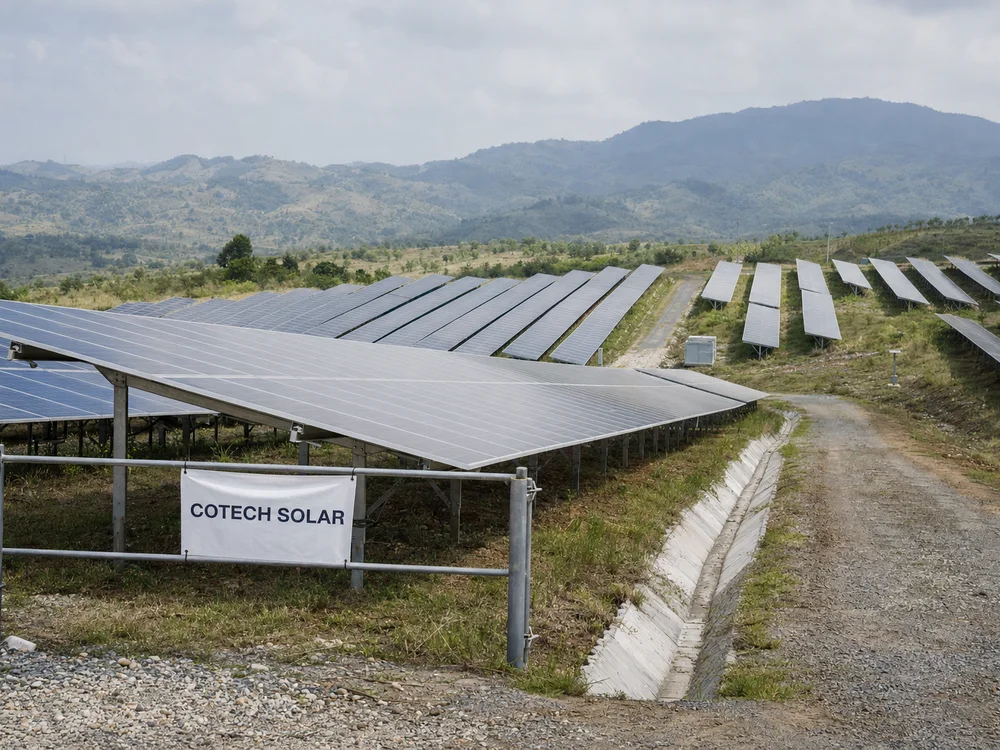
Short answer: bifacial modules capture reflected light on their rear side, adding extra energy — typically a meaningful single-digit to low-double-digit percentage — when the ground or surface behind them is reflective and the modules are elevated. On dark, flush rooftops the rear gain is small, so the benefit depends heavily on the installation.
How bifacial gain works
A bifacial module has a transparent or dual-glass rear, so light reflected off the surface below (grass, gravel, sand, a white roof, snow) reaches the back of the cells and adds to output. The size of this "bifacial gain" depends on:
- Albedo — how reflective the surface is. White membranes, concrete, sand and snow reflect a lot; dark asphalt reflects little.
- Height and tilt — modules raised above the surface let more reflected light reach the rear.
- Row spacing — wider gaps reduce shading of the reflected light.
Where bifacial pays off
| Scenario | Bifacial benefit |
|---|---|
| Ground-mount on light soil / gravel | High |
| Single-axis trackers | High |
| White or reflective flat roof (elevated) | Medium–High |
| Carports and elevated structures | Medium |
| Dark, flush rooftop | Low |
What to check before specifying bifacial
- Bifaciality factor — the rear-side to front-side power ratio under equivalent reference conditions, not the percentage of extra annual energy. Compare the same test conditions and model-specific value.
- Mounting — the mounting system must elevate the modules and avoid shading the rear.
- Durability — dual-glass bifacial modules are also more resistant to moisture and PID, a benefit even where rear gain is modest.
Read bifaciality alongside the electrical data
The CSTB72 580–605W TOPCon model lists Pmax bifaciality of 80 ± 5%; the CSHJ132 700–730W HJT model lists 85 ± 5%. Neither figure means that an installation will generate 80% or 85% more energy. The linked pages reproduce the front-side STC table and provide the source datasheets.
Request a layout-specific rear-irradiance assessment using the surface reflectance, module clearance, row spacing and rear shading. Then check inverter input and short-circuit current limits using the applicable bifacial design method. PVsyst's bifacial-system documentation explains the distinction between the module's bifaciality factor and the rear irradiance available in an installation.
The bottom line
Specify bifacial for ground mounts, trackers and reflective elevated roofs, where the rear gain is real. On a dark, flush residential roof, choose modules for efficiency and appearance instead — the bifacial premium may not pay back.
COTECH Solar's N-type modules are available in bifacial dual-glass, with HJT offering especially high bifaciality. See the Solar Modules page, or read our TOPCon vs HJT vs back-contact guide.
FAQ
How much extra energy do bifacial modules produce?
It varies widely with the installation. On reflective ground mounts or trackers, bifacial gain can add a meaningful single-digit to low-double-digit percentage of energy. On dark, flush rooftops the gain is small. The reflective surface, mounting height and row spacing all matter.
Are bifacial modules worth it on a rooftop?
It depends on the roof. On an elevated, reflective (for example white-membrane) roof, bifacial can add useful yield. On a dark, flush roof the rear gain is minimal, so the extra cost may not pay back — efficiency and appearance are better selection criteria there.
Do bifacial modules need special mounting?
Yes — to benefit, the mounting must raise the modules off the surface and avoid shading or covering the rear side. Ground-mount structures, trackers and elevated roof systems are well suited; see our mounting systems.